Why Is Ferrite Magnet Still the Practical Choice for Demanding Industrial Applications?
Article Summary
A Ferrite Magnet remains one of the most practical answers to these concerns. Known for its cost efficiency, strong resistance to rust, dependable magnetic performance, and suitability for mass production, this material continues to serve motors, speakers, home appliances, sensors, magnetic separators, and many other systems. In this article, we explain where customer pain points usually appear, how a Ferrite Magnet compares with other common magnet materials, what to check before placing an order, and why the right supplier matters when consistency is just as important as price.
Contents
- Outline
- What makes a Ferrite Magnet so widely used
- What pain points do buyers usually face
- Why Ferrite Magnet remains a practical choice
- How Ferrite Magnet compares with other magnet types
- Where Ferrite Magnet performs best
- How to choose the right Ferrite Magnet
- Why supplier capability affects final product quality
- FAQ
- Conclusion
Outline
- The basic material features and why they matter in real projects
- The most common customer concerns around cost, rust, stability, and supply consistency
- The main strengths and limitations of a Ferrite Magnet
- A practical comparison with neodymium and alnico magnets
- Application scenarios where ferrite is often the better commercial choice
- Key checks before ordering dimensions, grade, tolerance, coating, and quantity
- How an experienced manufacturer can reduce purchasing risk
What makes a Ferrite Magnet so widely used
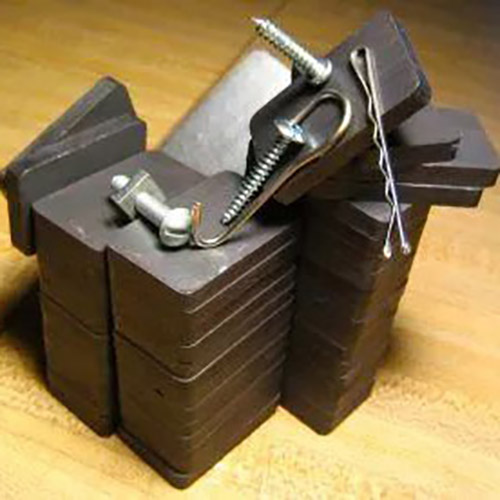
A Ferrite Magnet, often called a ceramic magnet, is made mainly from iron oxide combined with other metallic elements and sintered into a hard magnetic material. For many buyers, that technical definition matters less than the commercial result: stable magnetism, low raw material cost, good corrosion resistance, and easy integration into high-volume products.
In the real market, customers are rarely buying magnets in isolation. They are buying a complete result: a quieter motor, a more dependable speaker, a more efficient magnetic separator, or a durable appliance component that will survive daily use without pushing production cost too high. That is exactly where Ferrite Magnet products continue to stand out. They may not be the most powerful option in every design, but they often provide the most balanced solution when budget, durability, and manufacturability must all work together.
This is also why manufacturers and procurement teams keep returning to ferrite for long-running product lines. Once a design is validated, a ferrite-based solution is often easier to scale, easier to maintain, and easier to source consistently across repeat orders.
What pain points do buyers usually face
Magnet buyers often arrive with the same frustrations. Some have used over-specified materials and discovered the project became unnecessarily expensive. Others chose the cheapest option available and then struggled with unstable dimensions, weak pull force, cracking during assembly, or inconsistent magnetic performance between batches. In many cases, the pain point is not the magnet itself, but the gap between the application requirement and the purchased material.
- Price pressure from large-volume production or highly competitive end markets
- Corrosion concerns in humid or outdoor environments
- Performance mismatch when a stronger but costlier magnet is selected without real need
- Batch inconsistency that affects motor performance, speaker sound, or assembly yield
- Design limitations related to shape, brittleness, or tolerance control
- Supply reliability when repeat orders must match original specifications
A carefully chosen Ferrite Magnet can solve many of these problems at once, especially when the project values steady production economics over maximum magnetic energy. The key is understanding where ferrite is the right fit and where it is not.
Why Ferrite Magnet remains a practical choice
The long-term popularity of the Ferrite Magnet is not an accident. It comes from solving real industrial problems in a simple, repeatable way.
| Key Factor | Why It Matters to Buyers |
|---|---|
| Competitive cost | Helps keep total project cost under control in volume production |
| Corrosion resistance | Suitable for environments where rust would shorten service life |
| Reliable stability | Supports repeatable product performance in mature designs |
| No expensive rare earth content | Reduces dependence on more volatile material pricing |
| Strong suitability for mass production | Useful for motors, speakers, household products, and industrial assemblies |
One of the biggest reasons customers choose ferrite is that it delivers enough magnetic performance for many mainstream applications without introducing unnecessary material cost. That matters far more than chasing the strongest theoretical magnet. In actual product development, the best material is not the most extreme one. It is the one that makes the product reliable, manufacturable, and commercially viable.
Another overlooked advantage is corrosion resistance. While some magnet materials require more protective measures, ferrite naturally performs well in many environments. For buyers working on appliances, automotive subcomponents, loudspeakers, educational products, or magnetic holding systems, this makes sourcing and downstream processing easier.
How does Ferrite Magnet compare with other magnet types
Customers often compare ferrite with neodymium first, and sometimes with alnico depending on temperature or legacy applications. A fair comparison should focus on use case, not only magnetic strength.
| Magnet Type | Main Advantage | Main Limitation | Best Fit |
|---|---|---|---|
| Ferrite Magnet | Affordable, corrosion resistant, practical for volume use | Lower magnetic energy than rare earth magnets | Speakers, motors, appliances, separators, standard industrial products |
| Neodymium Magnet | Very strong magnetic force in compact size | Higher cost and greater sensitivity in some environments | Miniaturized devices, high-performance compact assemblies |
| Alnico Magnet | Good temperature performance in specific applications | Generally more expensive and application-specific | Special instruments, sensors, selected industrial systems |
So when does ferrite win? It wins when customers need a dependable and economical material rather than the strongest possible one. If your product has enough installation space and does not require ultra-high magnetic energy in a compact footprint, a Ferrite Magnet often delivers the better business result.
This is especially important for buyers who manage long product lifecycles. A slightly larger magnet that is easier to source, easier to cost-control, and easier to reproduce from batch to batch can be far more valuable than a premium material that complicates the supply chain.
Where does Ferrite Magnet perform best
A Ferrite Magnet is not a niche product. It is widely used in everyday manufacturing and industrial systems because it meets the needs of cost-sensitive, stable, repeatable production.
- Permanent magnet motors
- Loudspeakers and audio components
- Magnetic separators
- Sensors and measuring devices
- Home appliances
- Educational and consumer magnetic products
- Holding and fixing systems
In many of these areas, the true value is not only magnetic attraction. It is consistency. Manufacturers need magnets that fit mechanical design, arrive on schedule, and behave predictably in assembly. That is why ferrite continues to be trusted for well-established product architectures.
For example, in speaker manufacturing, designers often need a workable balance between magnetic circuit performance and final unit cost. In motor production, stability over repeated batches matters as much as the nominal magnetic value on paper. In separation systems, durability and economy are often key purchasing factors. Across these scenarios, the Ferrite Magnet earns its place because it supports both engineering logic and commercial logic.
How should buyers choose the right Ferrite Magnet
Choosing the right magnet should start from the application, not from a catalog photo or a single price quote. A buyer who wants fewer production problems should confirm the following points before ordering.
-
Define the application clearly
Is the magnet used for holding, driving, sensing, or separating? The function determines the real performance requirement. -
Confirm magnet grade and magnetic targets
Pull force, remanence, coercivity, and working conditions should all match the design purpose. -
Review shape and dimensions carefully
Ring, disc, block, arc, and custom forms may affect assembly method and tooling decisions. -
Check tolerance requirements
Tight dimensional control can improve assembly stability and reduce rework. -
Consider the service environment
Temperature, humidity, vibration, and installation stress all matter in long-term use. -
Evaluate batch consistency
A reliable supplier should support repeat orders with stable manufacturing quality.
Buyers who skip these steps often end up solving avoidable problems later: weak magnetic effect, poor fit with mating parts, breakage during installation, or product performance drift after mass production begins. A well-selected Ferrite Magnet should reduce risk, not create more of it.
Why does supplier capability affect final product quality
Even when the material category is correct, supplier capability still shapes the final result. Magnet manufacturing is not only about material composition. It also involves process control, tooling precision, dimensional consistency, magnetization quality, packaging protection, and communication efficiency. A buyer may receive two products labeled the same way and still experience very different results in assembly and performance.
That is where an experienced manufacturer becomes valuable. Ningbo New-Mag magnetics Co.,Ltd understands that customers are not just comparing unit prices. They are judging whether the magnet can support stable purchasing, predictable performance, and long-term cooperation. For many projects, that means clear technical communication, reasonable customization support, and dependable delivery from sample stage to bulk orders.
When a supplier can help confirm grade selection, optimize dimensions, and maintain batch-to-batch consistency, the customer saves more than money. They save engineering time, quality control time, and after-sales trouble. In competitive markets, those hidden savings often matter more than a small difference in quoted price.
FAQ
1. Is a Ferrite Magnet strong enough for industrial use?
Yes, in many industrial and commercial products a Ferrite Magnet provides fully adequate magnetic performance. It is widely used where stable function, practical size, and controlled cost are more important than maximum compact force.
2. What is the biggest advantage of Ferrite Magnet compared with rare earth magnets?
The biggest advantage is value balance. Ferrite offers a combination of affordability, corrosion resistance, and stable performance that fits many high-volume applications very well.
3. Does Ferrite Magnet rust easily?
Ferrite materials generally have strong resistance to corrosion, which is one reason they are favored in many environments where moisture or routine exposure would be a concern for other materials.
4. Is Ferrite Magnet suitable for custom shapes?
Yes. Depending on production requirements, ferrite magnets can be supplied in common forms such as disc, block, ring, and arc, and many projects can also be customized around application needs.
5. What should buyers prepare before sending an inquiry?
It is best to provide dimensions, shape, required magnetic direction, estimated quantity, application scenario, and any special tolerance or packaging requests. This helps the supplier recommend a more accurate solution quickly.
Conclusion
A Ferrite Magnet remains one of the smartest choices for buyers who care about practical performance, controlled cost, corrosion resistance, and dependable large-scale supply. It may not be the answer to every magnetic design challenge, but for a wide range of commercial and industrial products, it continues to offer a highly efficient balance between engineering need and purchasing reality.
If you are looking for a trusted magnet manufacturer that understands both technical details and real-world project demands, Ningbo New-Mag magnetics Co.,Ltd is ready to support your application with suitable ferrite solutions, stable quality, and responsive service. Contact us today to discuss your requirements, request a quotation, and find the right magnetic solution for your next project.